Most homeowners never think about water damage until they are standing in a flooded kitchen at midnight, searching their phone for help. This guide exists so that moment does not catch you unprepared. Here is everything you need to know about protecting your Orange County home from water, mold, and fire, written by the people who respond when disaster strikes.
The Invisible Threat: Why Orange County Homes Face Unique Risks
Orange County presents a paradox. We live in one of the driest climates in America, yet water damage remains the most common property insurance claim in the region. The Mediterranean climate that draws people here creates specific vulnerabilities that most homeowners never consider until something goes wrong.
Our coastal communities, from Seal Beach down through San Clemente, experience ambient humidity levels that hover between 60 and 80 percent for much of the year. Huntington Beach, Newport Beach, and the harbor communities face salt air exposure that accelerates corrosion in plumbing fixtures and appliances. Properties within two miles of the Pacific Ocean experience measurably higher moisture stress on building materials than inland homes in Irvine or Anaheim Hills.
Then there is the age factor. Many Orange County neighborhoods were developed in distinct waves. The tract homes of Garden Grove and Westminster date largely to the 1960s. Huntington Harbour and parts of Newport Beach saw heavy development in the 1970s. These homes, now 50 to 60 years old, contain original plumbing that has reached or exceeded its designed lifespan. Galvanized steel pipes from this era corrode from the inside out, gradually restricting water flow before eventually failing.
Our weather patterns compound these vulnerabilities. Orange County's rainy season runs from November through March, with February historically being the wettest month. But our rainfall arrives differently than in other regions. Rather than steady, gentle rain, we experience atmospheric river events that dump inches of water in hours. These sudden deluges overwhelm aging infrastructure, reveal hidden roof vulnerabilities, and saturate soil in ways that affect foundations.
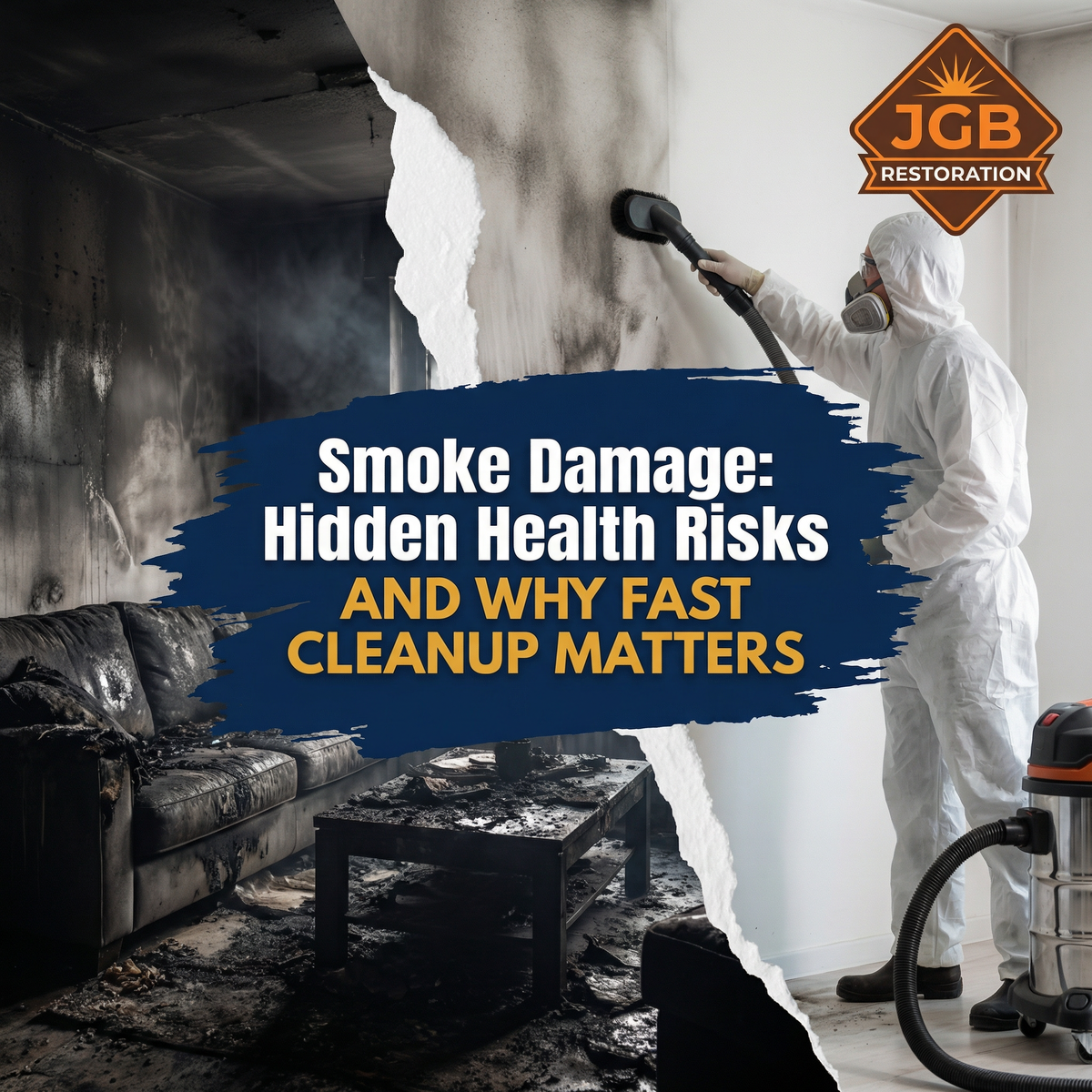
The Santa Ana winds create a different threat entirely. These offshore winds, which typically blow strongest from October through December, create extreme fire conditions while simultaneously dropping humidity to single digits. The same winds that spread wildfires can carry smoke and ash into homes miles from actual flames, creating smoke damage that many homeowners do not recognize until weeks later.
Hour by Hour: The Anatomy of Water Damage
Understanding how water damage progresses helps explain why restoration professionals emphasize rapid response. The deterioration follows a predictable pattern, and each passing hour narrows your options for recovery.
Minutes 1-60: Initial Spread
Water follows gravity and capillary action simultaneously. It pools on floors while wicking upward into drywall, baseboards, and carpet padding. A single gallon of water from a burst pipe can spread across 20 square feet of flooring in the first hour. Carpet padding begins absorbing water immediately, acting like a sponge that holds moisture against the subfloor.
Hours 1-4: Absorption Phase
Drywall absorbs water at approximately 1 inch per hour under typical conditions. A ceiling leak that starts as a small stain can saturate a 4-foot radius of drywall in four hours. Furniture legs begin wicking moisture into upholstery. Laminate flooring starts to swell at the seams. Grout lines in tile floors allow water to penetrate to the subfloor beneath.
Hours 4-24: Saturation Deepens
Water reaches wall cavities and begins saturating insulation. Wood framing absorbs moisture and begins to swell. Paint may start bubbling or peeling. Metal fasteners, hinges, and brackets begin surface oxidation. The water line on drywall extends well above the visible wet area as moisture wicks upward through the paper facing.
Hours 24-48: The Microbial Window
Mold spores, which exist naturally in all indoor air, find the moisture they need to germinate. Bacterial populations begin multiplying in standing water and saturated materials. Category 1 clean water begins transitioning to Category 2 gray water as microbial contamination increases. Odors become noticeable as organic materials begin decomposing.
Days 3-7: Structural Compromise
Visible mold colonies appear on surfaces. Drywall loses structural integrity and may begin sagging or crumbling. Wood flooring cups and warps. Subfloor delamination begins in particle board or OSB materials. Secondary damage now rivals or exceeds the original water damage in restoration cost.
This timeline explains the industry's emphasis on 60-minute response times. Every hour of delay allows water to penetrate deeper into building materials, expand the affected area, and create conditions for secondary damage that dramatically increases restoration costs.
The Science of Mold: What Actually Happens After Water Intrusion
Mold is not a problem that appears; it is a condition that develops. Understanding the biology helps explain why certain interventions work and others fail.
Mold spores exist everywhere. They drift through outdoor air, enter homes through windows and doors, hitchhike on clothing and pets, and circulate through HVAC systems. A cubic meter of typical indoor air contains hundreds to thousands of mold spores at any given time. This is normal and unavoidable. The spores themselves, in low concentrations, pose no threat.
Problems begin when spores find the three conditions they need for growth: moisture, an organic food source, and temperatures between 60 and 80 degrees Fahrenheit. Orange County homes provide the temperature range year-round. Building materials, including drywall paper, wood, carpet backing, and dust accumulation, provide the food source. Only moisture is missing under normal conditions.
When water damage occurs, the missing ingredient arrives. Within 24 to 48 hours, spores that have landed on newly wet surfaces begin germinating. They extend root structures called hyphae into the material, beginning the process of breaking down organic compounds for nutrition. Visible colonies typically appear between days 3 and 12, depending on conditions.
Why Bleach Fails
Many homeowners attempt mold removal with household bleach, and the apparent success leads them to believe the problem is solved. The reality is more complicated.
Bleach effectively kills mold on non-porous surfaces like tile, glass, and sealed countertops. On these materials, mold grows only on the surface, and bleach can reach and kill the entire organism. The mold dies, bleach whitens the remains, and the surface appears clean.
Porous materials work differently. When mold grows on drywall, wood, or grout, the hyphae penetrate into the material. Bleach, which is mostly water, cannot penetrate as deeply as the mold has grown. The surface mold dies and bleaches white, but the root structure remains alive inside the material. Within weeks, new growth emerges from the surviving roots.
Professional mold remediation addresses this through material removal rather than surface treatment. Affected drywall is cut away, not cleaned. Contaminated carpet is disposed of, not treated. This approach eliminates the entire organism rather than creating the appearance of success while leaving the problem in place.
Orange County's Mold Accelerators
Several factors make Orange County homes particularly susceptible to rapid mold development after water intrusion.
Coastal humidity provides a head start. In communities like Huntington Beach, Newport Beach, and Dana Point, ambient indoor humidity often hovers near the 60 percent threshold where mold growth accelerates. Water damage in these homes faces less of a humidity deficit to overcome before reaching optimal growth conditions.
Our mild temperatures eliminate the natural mold suppression that freezing winters provide in other regions. Mold growth slows dramatically below 40 degrees Fahrenheit. Orange County rarely sees temperatures that low, meaning mold can grow year-round given adequate moisture.
Many Orange County homes feature the kind of construction that allows water and mold to remain hidden for extended periods. Slab foundations, common in 1960s and 1970s tract developments, allow water to travel beneath finished flooring without visible signs. Stucco exteriors, nearly universal in the region, can trap moisture in wall cavities. By the time mold becomes visible or produces noticeable odors, extensive hidden growth may already exist.
The Insurance Reality: What Actually Gets Covered
Insurance coverage for property damage follows a logic that makes sense once you understand the underlying principles, but often surprises homeowners facing their first claim.
The fundamental principle is this: homeowners insurance covers sudden and accidental damage from covered perils. Each word matters.
Sudden means the damage-causing event happened quickly, not gradually over time. A pipe that bursts and floods your kitchen is sudden. A pipe that has been slowly leaking for months, gradually causing damage, may not qualify. The distinction often determines coverage.
Accidental means the damage was not intentional or foreseeable through reasonable maintenance. A water heater that fails unexpectedly is accidental. A water heater that you knew was leaking but chose not to repair becomes questionable.
Covered perils are the specific causes of damage your policy includes. Most policies cover burst pipes, appliance failures, and rain entering through storm damage. Most policies exclude flood water from external sources, requiring separate flood insurance.
The Maintenance Exclusion
Perhaps no insurance concept causes more claim denials than the maintenance exclusion. Standard policies do not cover damage resulting from failure to maintain your property.
If your roof has been missing shingles for months and water finally penetrates during a storm, the insurance company may argue that proper maintenance would have prevented the damage. If a slow leak under your bathroom sink caused mold that you did not notice for six months, the insurer may question whether reasonable attention to your property would have caught the leak earlier.
Documentation becomes crucial. When you discover water damage, your first call should be to a restoration professional, and your second call should be to your insurance company. Immediate action demonstrates that you are responding reasonably to sudden damage rather than neglecting an ongoing problem.
Mold Coverage Limits
Many California homeowners policies include specific limits for mold remediation, often capping coverage at $5,000 to $10,000 regardless of actual costs. A significant mold remediation project can easily exceed these limits.
Review your policy for mold endorsements or exclusions. If you live in a coastal community with elevated humidity, or in an older home with aging plumbing, consider whether your mold coverage limits provide adequate protection for the risks you face.
Choosing a Restoration Company: The Questions Nobody Thinks to Ask
When water is flooding your home at midnight, you are not in a position to conduct careful research. This is precisely why thinking through your criteria now, before emergency strikes, can protect you from poor decisions made under stress.
The Certification Question
The Institute of Inspection Cleaning and Restoration Certification, known as IICRC, provides the industry's recognized professional credentials. But not all certifications are equal, and company certification differs from technician certification.
Some companies hold IICRC certification at the company level but employ technicians without individual credentials. The person actually performing work in your home may have minimal training. Ask specifically whether the technicians who will work on your project hold relevant IICRC certifications.
Relevant certifications include Water Restoration Technician (WRT) for water damage, Fire and Smoke Restoration Technician (FSRT) for fire damage, and Applied Microbial Remediation Technician (AMRT) for mold work. A technician with comprehensive training holds multiple certifications relevant to the services they provide.
The Scope Question
Restoration involves two distinct phases: mitigation and reconstruction. Mitigation stops damage progression through water extraction, drying, and removal of unsalvageable materials. Reconstruction repairs and replaces damaged building components to return your home to pre-loss condition.
Some companies perform only mitigation and refer reconstruction to other contractors. This creates coordination challenges, scheduling gaps, and potential disputes about what damage existed versus what occurred later. Single-source providers handle both phases under one roof, maintaining accountability and knowledge continuity throughout your project.
Ask whether the company handles both mitigation and reconstruction. If they refer out reconstruction, understand how that handoff will work and who takes responsibility if problems arise.
The Response Time Question
Emergency response time matters because water damage progresses hourly. Ask specifically about guaranteed response time, not just whether the company offers 24/7 service.
Many companies advertise same-day response without committing to specific timeframes. During peak demand, such as following a major storm, these companies may take six, eight, or twelve hours to arrive. Meanwhile, water continues spreading through your home.
A specific response time guarantee, such as 60 minutes, indicates a company with sufficient capacity and proper dispatching systems to honor emergency commitments even during busy periods.
Prevention: The Maintenance That Actually Matters
Not all home maintenance offers equal protection against property damage. Certain tasks provide disproportionate protection relative to their cost and effort. Here is what experienced restoration professionals see as the highest-return preventive measures.
The Highest-Impact Maintenance
Know your water shutoff locations. In an emergency, seconds matter. Know where your main water shutoff valve is located, typically near the water heater or where the main line enters your home. Know how to operate it. Test it annually to ensure it works. Many homeowners discover during emergencies that their shutoff valve has corroded in place and will not turn.
Inspect water supply hoses annually. The flexible hoses connecting your washing machine, dishwasher, refrigerator ice maker, and toilets cause a disproportionate share of water damage claims. These hoses degrade over time and often fail without warning. Replace rubber hoses with braided stainless steel versions, which last longer and fail less catastrophically. Replace all supply hoses every five years regardless of appearance.
Service your water heater. Water heaters fail most often in the final years of their lifespan. Standard tank water heaters last 8 to 12 years. If yours is approaching or exceeding that range, budget for replacement rather than waiting for failure. A controlled replacement costs less than emergency replacement plus water damage restoration.
Maintain your roof before rainy season. Have your roof professionally inspected in early fall, before Orange County's rainy season begins. Address any identified issues before storms arrive. The cost of proactive repair is invariably less than the cost of storm damage restoration.
The Seasonal Checklist
Before rainy season (September-October): Professional roof inspection, gutter cleaning, window seal check, drainage verification around foundation, water heater inspection.
During rainy season (November-March): Monitor for new water stains on ceilings or walls after each storm, check for musty odors indicating hidden moisture, ensure gutters remain clear.
After rainy season (April-May): Inspect for mold in areas that were wet during winter, check under-sink cabinets for signs of leaks, verify crawl spaces are dry.
Before Santa Ana season (September-October): Clear dead vegetation from property perimeter, clean roof and gutters of debris, ensure attic vents have screens to prevent ember intrusion, verify smoke detectors function.
Taking Action: Your Next Steps
If you are reading this during an active emergency, call for professional help immediately. Water damage progresses hourly, and every minute of delay increases both damage extent and restoration cost. Do not wait until morning, do not attempt DIY solutions, and do not assume the damage will dry on its own.
If you are reading this as preparation, consider these concrete steps:
First, locate and test your main water shutoff valve. Walk to it right now. Turn it off and back on to verify it operates. If it does not, schedule a plumber before you need it in an emergency.
Second, photograph your home's current condition. Walk through each room and document the condition of walls, floors, ceilings, and major belongings. Store these images off-site or in cloud storage. This documentation proves pre-loss condition if you ever need to file an insurance claim.
Third, review your homeowners insurance policy. Understand your deductibles, coverage limits, and any endorsements or exclusions for water damage, mold, and flood. Consider whether your coverage matches your actual risk profile.
Fourth, identify a restoration company you would call before you need one. Verify their credentials, understand their response time commitment, and save their number in your phone. The middle of an emergency is not the time for research.
Property damage is never convenient, but preparation reduces both the damage itself and the stress of responding to it. The homeowners who fare best are those who understood the risks, maintained their properties appropriately, and knew exactly what to do when something went wrong.


.png)